Coffee · Landscapes · 2050

Where young people
choose to stay.

Building the tools, partnerships and business models needed to make entire coffee-growing landscapes viable for all households, women, youth, workers and the natural environment.

"Youth must be able to choose farming. This means rural landscapes must be livable, attractive, healthy and entertaining. And for the youth who chooses to leave, we create the incentives for their transition out of farming."
The motivation behind 2050 Landscapes
Step 1 — Education

The Future: Youth-Driven Coffee Landscapes in 2050

A 12-hour course for coffee professionals — roasters, traders, sustainability managers, development professionals and anyone working along the value chain — who want to move beyond patches and towards real transformation.

Led by practitioners and evaluators of sustainability programmes, and by farmers themselves. Not a theory exercise — a bridge from evidence to action.

4Modules
12hLive sessions
July2026 pilot
Utrecht+ Online

🌱 Online Pilot — 2026

Four evenings in July. A small cohort, live interaction, real cases from Ethiopia, Uganda, Costa Rica and Colombia.


Individual: €300

Company (multiple employees): reduced rate on request

Can't pay? A number of free spots are available.


Register your interest
1

The State of the Coffee Sector

Understand the key sustainability challenges — living income gaps, invisible workers, gender inequality, power distribution, and the real impact of existing certifications and programmes.

History & status quo Big Coffee vs specialty Living income gaps Invisible workers Youth & gender inclusion Evidence & evaluation
2

Business Models & Incentives

Explore what drives sustainability strategies in commercial and specialty coffee. Dive into innovative business models that unlock cost-efficiencies.

Scaling impact-driven models Cost & pricing models Digital & compliance solutions Gender & feminist analysis Youth & the choice to farm
3

Theory to Action: Transforming Coffee Landscapes

Deep-dive into real landscape programmes run by the youth in partner cooperatives in Ethiopia, Uganda, Costa Rica and Colombia.

Partner coop case studies Landscape action plans Youth-led design Premium model deep dive
4

Adopt the Vision — Join the Partnership

Commit to a shared vision for 2050. If you're a roaster, brand or trader, you can link your sourcing volumes to our partners, or you can adopt our business and impact model in your own supply chains. Either way, the course ends with adopting real-world solutions and with being part of a vision of systemic change with measurable outputs and outcomes.

The 2050 Vision Joining workstreams Committing volumes Long-term partnerships
Pricing — July 2026

Invest in real change

The July pilot is intentionally small. Every participant will shape the course's final form. Prices reflect that — and the belief that good knowledge should be accessible.

Company
On request

Sending two or more employees? A reduced per-person rate is available. Email us to discuss volumes and team needs.

Free spot
€0

A limited number of free spots exist for those who can't pay. No lengthy application — just email us and tell us about yourself.

The Approach

A landscape lens —
people first

Most companies and sustainability programmes treat symptoms. They have scale (commercial coffee) or depth (relationship based coffee). 2050 Landscapes brings evidence of what works in both 'worlds', to create systemic change and target root causes of poverty. We put forward a shared vision which brands can commit to, and we work with a business model (a premium-per-tonne) that makes it all self-sustaining.

01 — Vision

A shared blueprint for action

In 2050 we want to manage 10 coffee landscapes in which all households earn living incomes and living wages, and all land use follows regenerative principles.

02 — Impact

Systemic interventions only

Living income and living wages before environmental targets. Because income can be addressed today through premiums, while environmental funding is often promised and rarely delivered. For us, renovation, diversification or regenerative agriculture practices are simply a baseline. Our long-term horizon enables us to explore innovative interventions. For example, we aim to segment ambitious farmers and the farmers wishing to leave agriculture, and enable exchanges of land rights and titles. Through pre-finance, cash transfers and long-term purchasing commitments, such interventions can solve the problem of unprofitable smallholder farmers.

03 — Inclusion

Youth-driven Landscape Action Plans

Young people are not just a beneficiary group — they are co-designers and gatekeepers of a multi-stakeholder platform in each landscape. They ensure professional governance, monitoring, service and product delivery, both downstream and upstream. Their main tools are the Landscape Action Plans, built with them in the driver's seat. These are updated and presented regularly through online monthly progress updates to landscape partners, especially private buyers. The Landscape Action Plans integrate standard social, economic and environmental targets, are compliant to sector commitments, ESG targets and indicators, but focus on transformational interventions. These are critical farm, household, community and landscape-level investments, similar to those in a cooperative's premiums plan. For example: farm renovation, land access interventions, inclusive family visions (using Gender Action Learning System (GALS)), health and education facilities, insurance, regenerative agriculture or replanting of ecological corridors and conservation activities.

04 — Sustainability

A premium model as a fundamental pillar of effectiveness and sustainability

A cost-efficient premium-per-tonne model, shared across multiple coffee roasters and traders sourcing any crop in the partner landscapes. The premium gives access to integrated digital, technical, agronomic, social and compliance tools, offered in a cost-efficient one-stop-shop for the private and public sector actors. Buying from our partner landscapes means direct, regular contact with young coop leaders, who manage a multi-stakeholder platform in each landscape. We train and coach them on entrepreneurship, leadership, inclusion, finance, trade, standards & compliance, data & AI, scaling business cases, conserving and restoring nature, and providing efficient services to farmers and workers.

Digital Solutions Stack

One-stop infrastructure

Partnering with proven ag-tech providers to give coops and landscape programmes access to the tools they need — without each buyer paying for them separately.

bridge.ong

Farmer Digital Passports

Verifiable credentials wallet giving farmers self-owned, portable data — empowering smallholders with digital identity and traceability.

TRACT

ESG Reporting Automation

Answer library and AI-powered data collection — automating reporting for standards, regulations (EUDR, HRDD) and buyers.

passionfruit.earth

Landscape Action Plans

Easy-to-use platform enabling coops to upload existing data and build collaborative Landscape Investment & Action Plans.

SANA + Elucid

Healthcare & Education

Foundational interventions: SANA provides mental health programmes for farmers; Elucid delivers health and financial services.

Youth Inclusion Framework

Not all inclusion is equal

Most "youth in coffee" programmes measure participation. We measure agency — whether young people are choosing this future, or are trapped in it. The framework below, used across our partner landscapes, plots both.

High Low AGENCY → PARTICIPATION → Low High Voluntary Exclusion Chose to leave farming — found a better path Robust Inclusion Chose coffee — earning a living income, by choice Exclusion Want in, blocked by land, skills or discrimination Adverse Inclusion Trapped — farming out of necessity, not choice

Robust inclusion is the goal

Decent livelihood, decent terms, by choice — not by default.

Voluntary exclusion is also success

A young person choosing a non-farm future, with real alternatives, is not a programme failure.

Adverse inclusion is the hidden failure

Participation numbers look good. Agency is absent. Most "youth in coffee" metrics stop here.

Exclusion is the starting point for most

Land access, skills, and social or gender norms keep young people out — even when they want in.

Value Creation vs. Distribution

Where the money actually goes

A simplified view of how value is created and distributed across the coffee chain. The gap between the two bars at farm level is the root of the living income problem — and the reason premiums alone rarely close it.

Value creation Value distribution 35% 12% Farm 18% 7% Workers 9% 11% Processing 6% 8% Exporting 5% 10% Importing 27% 52% Roasting & Retail

Illustrative distribution based on patterns commonly reported across specialty coffee value chains. Exact splits vary by origin, contract structure and route to market.

Who's Behind This

Practitioners, not theorists
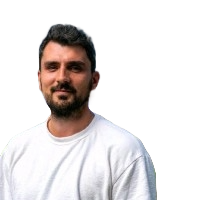
Ștefan Petruțiu
Ștefan Petruțiu
Founder, 2050 Landscapes

Impact-driven senior manager with 12 years' experience in sustainable smallholder agriculture and value chain development. Using experience in evaluation, I designed and implemented programmes which achieved commercial success and real transformation. Led diverse teams in the Netherlands and in multiple African countries (Ethiopia, Nigeria, Cote D'Ivoire, Ghana), and multi-stakeholder partnerships, integrating social, economic and environmental goals.

Living income design Programme evaluation Youth & gender inclusion
Register

Join the
pilot

Four evenings. 12 hours that could change how you think about sourcing, sustainability, and the communities behind your coffee.

📅

Four evenings, July 2026

Exact dates confirmed on registration. Online, with an option for Utrecht in-person.

🌍

Online + Utrecht

Live, interactive sessions. Not recorded lectures — real exchange between participants and practitioners.

✉️

Questions?

stefan@2050landscapes.com

We'll confirm availability and send payment details by email.

✓ Thanks! We'll be in touch shortly.